"Neurobiological evidence suggests that the aspects of cognition that we recruit most heavily in schools, namely learning, attention, memory, decision-making, and social functioning, are both profoundly affected by and subsumed within the processes of emotion."
– Mary Helen Immordino-Yang & Antonio Damasio "We Feel, Therefore We Learn: The Relevance of Affective and Social Neuroscience to Education." Mind, Brain, and Education, 2007
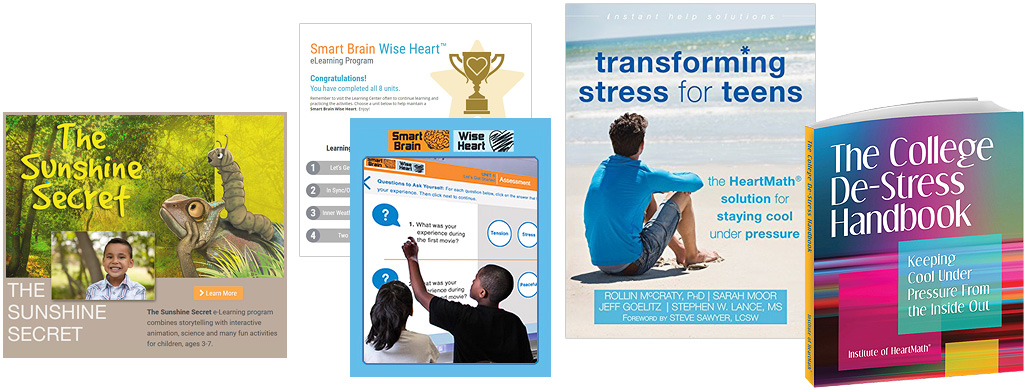
Researchers at the Institute of HeartMath have spent many years exploring how people can enhance learning and performance. Collaborating with educators nationwide, HeartMath developed the TestEdge® supplemental learning programs to help students improve learning and test performance. Each program includes age-specific heart-based emotion self-regulation tools tailored especially for various age and grade levels. Students will appreciate how TestEdge speaks to them about their common test-taking experiences and offers solutions that help both their academic and social lives. Teachers will appreciate students’ improved academic focus and motivation and the positive changes in their attitudes and behavior.
Based on
22 years of research on the psychophysiology of learning and performance, emotional resilience and heart-brain communication, TestEdge teaches a set of easy-to-use self-regulation tools and strategies that enable students to recognize and regulate test-related anxiety and negative attitudes that block learning and test performance. The program has been successfully implemented in schools throughout the U.S. and in several foreign countries. A major TestEdge study funded by the U.S. Department of Education demonstrated statistically significant improvements in standardized test scores along with global improvements in psychosocial functioning.
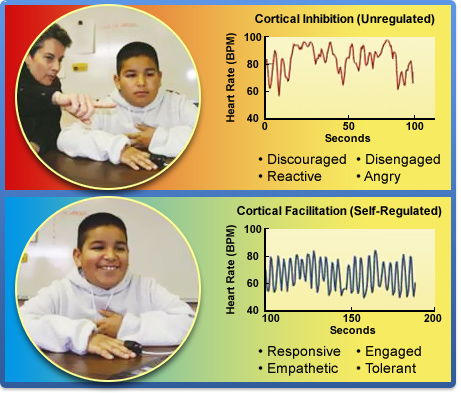
HeartMath research has identified a measurable physiological state that underlies optimal learning and performance. In this state, our emotions are calmer and our brain, nervous system and other bodily systems function with increased efficiency. In simple terms, we’re more in sync. This in turn facilitates the higher cognitive processes critical for focused attention, reasoning and creativity – all essential for success in school. Being in sync also improves behavior, relationships and general well-being for students and teachers. Learn more about the theoretical basis of TestEdge.