

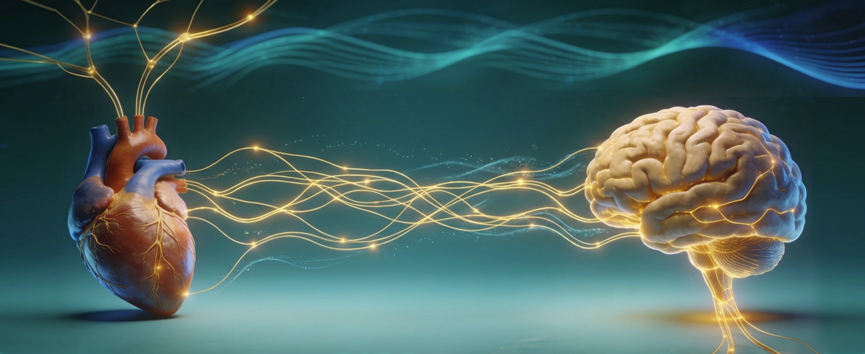
For most of modern history, scientists treated the heart as just a pump. Smart, sure. Essential, absolutely. But a source of intelligence? Of emotion? Of learning? That idea was dismissed — sometimes openly ridiculed — for decades.
Meanwhile, many teachers and parents already knew better. Anyone who has watched a child’s shoulders drop when they feel seen, or seen a student freeze when they feel threatened, knows intuitively that what’s happening in the body is inseparable from what’s happening in the mind. It turns out, science is catching up.
When Science Separated the Mind from the Body
Beginning in the 17th century, philosopher René Descartes shaped Western science with a powerful idea: the mind and body are separate. The brain thinks and feels. The body — including the heart — simply runs on autopilot. This “brain-centric” model became the foundation for medicine, psychology, and eventually education itself, which came to prize logical, rational, cortical thinking above all else.
When researchers in the 1960s first proposed that the heart was sending signals to the brain — not just receiving them — they were largely ignored. The dominant scientific culture wasn’t ready to listen to the heart.
Discovering the Heart’s Neural Network
That changed in 1991 when Dr. J. Andrew Armour formally introduced the concept of the “heart brain” — a complex network of approximately 40,000 neurons embedded in the heart itself, capable of sensing, learning, and even storing memory. The heart wasn’t just pumping blood.
It was processing information and sending a continuous stream of signals upward to the brain.
Researchers discovered that roughly 80–90% of the fibers in the vagus nerve — the main communication highway between heart and brain — carry signals from the heart up to the brain, reaching areas involved in emotion, attention, memory, and decision-making. In other words, the heart speaks first, and the brain listens.
HeartMath® and the Science of Coherence
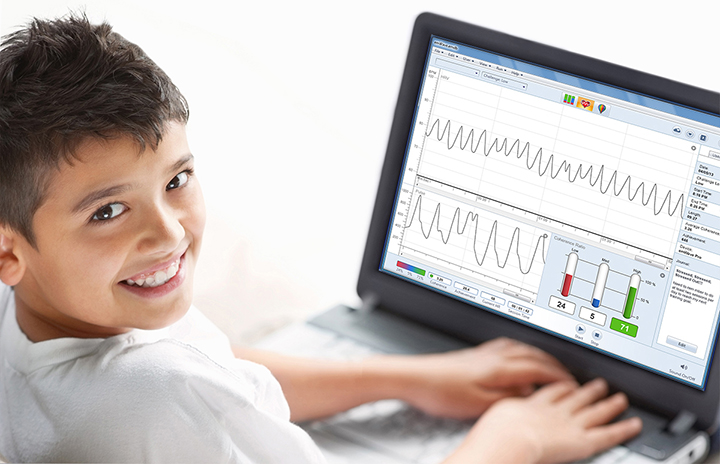
Through the 1990s and beyond, HeartMath Institute researchers showed that the pattern of the heart’s rhythm directly influences how a student thinks, feels, and performs. Positive emotions like appreciation and compassion create smooth, ordered heart rhythm patterns. Stress and frustration create chaotic ones. And those patterns shape the quality of signals the heart sends to the brain, affecting everything from focus to emotional regulation to academic performance.
This state of aligned communication between heart and brain — coherence — is measurable, teachable, and learnable.
Why This Matters in the Classroom
Today, this research has moved squarely into the mainstream. Science, Nature, The European Heart Journal, and Frontiers in Cardiovascular Medicine have all published major reviews of heart-brain interaction in recent years. Institutions from Harvard to UC San Diego are running active research programs on the heart-brain axis.
When we help students shift into heart coherence, we are not just helping them “calm down.” We are helping them reorganize their physiology in ways that support everything we want for them in school — focus, resilience, empathy, and the capacity to learn.
The heart was talking all along. Now we have the science to prove it — and the tools to teach it.