

Global Coherence Monitoring System
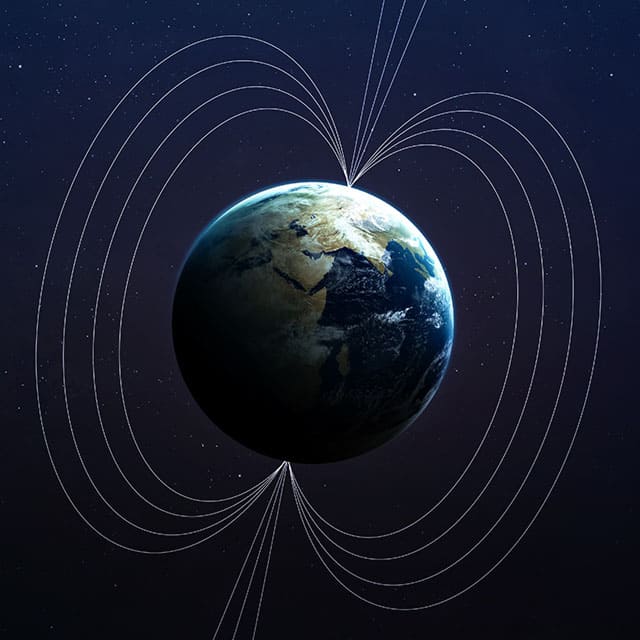
The Global Coherence Monitoring System (GCMS) is one of four interconnected research systems GCI uses to study how humans, living systems, and Earth’s magnetic environment influence one another. This global network of ultrasensitive magnetometers continuously measures the resonant frequencies in Earth’s magnetic field.
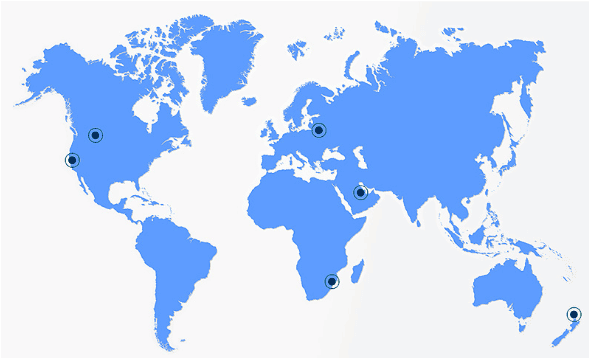
As of 2026, sensor sites are
operating in:
- Boulder Creek, California
- Hofuf, Saudi Arabia
- Alberta, Canada
- Baisogala, Lithuania
- Northland Region of New Zealand
- Kwazulu Natal, South Africa

What We Measure
GCMS sensors track changes in geomagnetic activity caused by solar storms, variations in solar wind speed, disruptions in Schumann resonances, and potentially the signatures of major global events with strong emotional components.
The resonant frequencies in Earth’s magnetic fields directly overlap with those of the human brain, cardiovascular system, and autonomic nervous system. This means numerous physiological rhythms and collective behaviors are synchronized with solar and geomagnetic activity—and disruptions in these fields can affect human health and behavior. When Earth’s magnetic field is disturbed, people may experience sleep disturbance, mental confusion, unusual
fatigue, or feelings of being on edge without apparent cause.
Our Research Questions
We use GCMS to investigate:
How Earth’s magnetic fields affect human physiological, mental, and emotional processes
Whether magnetic field changes occur before natural catastrophes like earthquakes or volcanic eruptions
Potential correlations between field disturbances and social unrest or collective human events

GCI Research Hypotheses
The following hypotheses guide our ongoing collaborative research:
- Human and animal health, cognitive functions, emotions, and behavior are affected by solar, geomagnetic, and other earth-related magnetic fields.
- Earth’s magnetic field acts as a carrier of biologically relevant information that connects all living systems.
- Every person affects the global information field.
- Collective human consciousness affects the global information field. Large numbers of people creating heart-centered states of care, love, and compassion generate a more coherent field environment that can benefit others and help offset planetary discord and incoherence.

The Interconnection Hypothesis
We propose that human emotions and consciousness interact with and encode information in the geomagnetic field, creating a feedback loop between humans and Earth’s energetic systems. This encoded information may be communicated nonlocally between people at a subconscious level, linking all living systems within the field environment and influencing collective consciousness.
Why This Matters
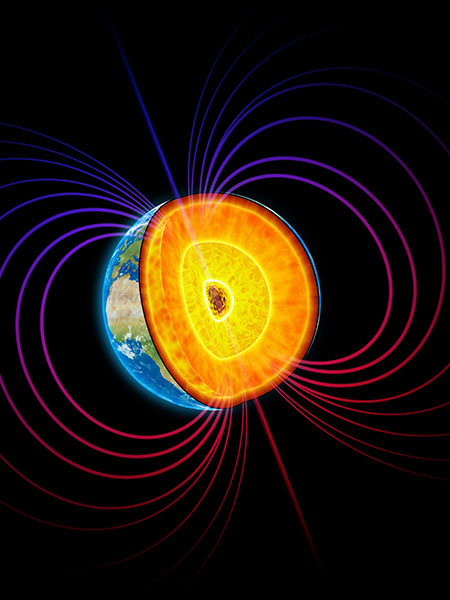
Every cell in our bodies exists within fluctuating magnetic fields from both Earth and the sun. Human physiological rhythms synchronize with solar and geomagnetic activity, meaning disruptions in these fields can affect virtually every biological system. Research has linked changes in Earth’s magnetic field to:
- Heart rhythm variations and cardiovascular events
- Brain and nervous system activity changes
- Alterations in athletic performance, memory, and cognitive tasks
- Shifts in mood, including depression and anxiety
- Sleep quality and circadian rhythm disruption
The frequencies generated by Earth and its ionosphere (0.01 to 300 Hz) overlap significantly with human cardiovascular, brain, and autonomic nervous system frequencies. GCMS data is revealing that we may be more deeply interconnected with Earth’s magnetic field than previously understood.
FAQs
What is the Global Coherence Monitoring System (GCMS)?
The Global Coherence Monitoring System (GCMS) is a global network of ultrasensitive magnetometers, operated by the HeartMath Institute’s Global Coherence Initiative, that continuously measures resonant frequencies in Earth’s magnetic field. GCMS is one of GCI’s four research systems for studying how humans, living systems and Earth’s magnetic environment may influence one another.
What does a GCMS magnetometer measure?
Each GCMS magnetometer measures fluctuations in Earth’s magnetic field, including changes in geomagnetic activity caused by solar storms, variations in solar wind speed and disruptions in Schumann resonances. Whether the sensors also detect signatures of emotionally charged global events is a research question GCI is investigating, not an established capability.
Where are the GCMS sensor sites located?
As of 2026, GCMS sensor sites operate in six locations: Boulder Creek, California, USA; Hofuf, Saudi Arabia; Alberta, Canada; Baisogala, Lithuania; the Northland Region of New Zealand; and KwaZulu-Natal, South Africa.
Can I see GCMS data?
Yes. HeartMath publishes GCMS live data online, including hourly-updated Schumann resonance power for each site (0.32 to 36 Hz, shown as a 24-hour moving average) and a daily spectrogram calendar covering 1 to 50 Hz. The live data page also shows GCP 2.0 random network variance and NOAA solar wind data for comparison.
What research uses GCMS measurements?
GCMS data have been used in peer-reviewed studies of how human heart rate variability relates to solar and geomagnetic activity. Examples include a 2018 Scientific Reports study that tracked participants’ HRV over five months alongside local magnetic field data, and a study in Lithuania examining whether heart coherence practice affects synchronization between HRV and geomagnetic activity.
Which GCMS findings are established, and which are hypotheses?
Established: GCMS measures changes in Earth’s magnetic field, and published studies report correlations between geomagnetic activity and human heart rhythms. Hypotheses: that Earth’s field carries biologically relevant information, that collective human emotion affects the global field, that field changes precede earthquakes, and GCI’s interconnection hypothesis. The measured correlations give these hypotheses a solid starting point, and ongoing GCI studies are designed to test how and why these connections occur.
Just For Fun
Global Coherence Monitoring System Installation – South Africa
The Global Coherence Monitoring System was installed in the KwaZulu Natal
province, South Africa in June 2015. This informative video shows, from start to
finish, the installation of the sensor.